
 Anheften
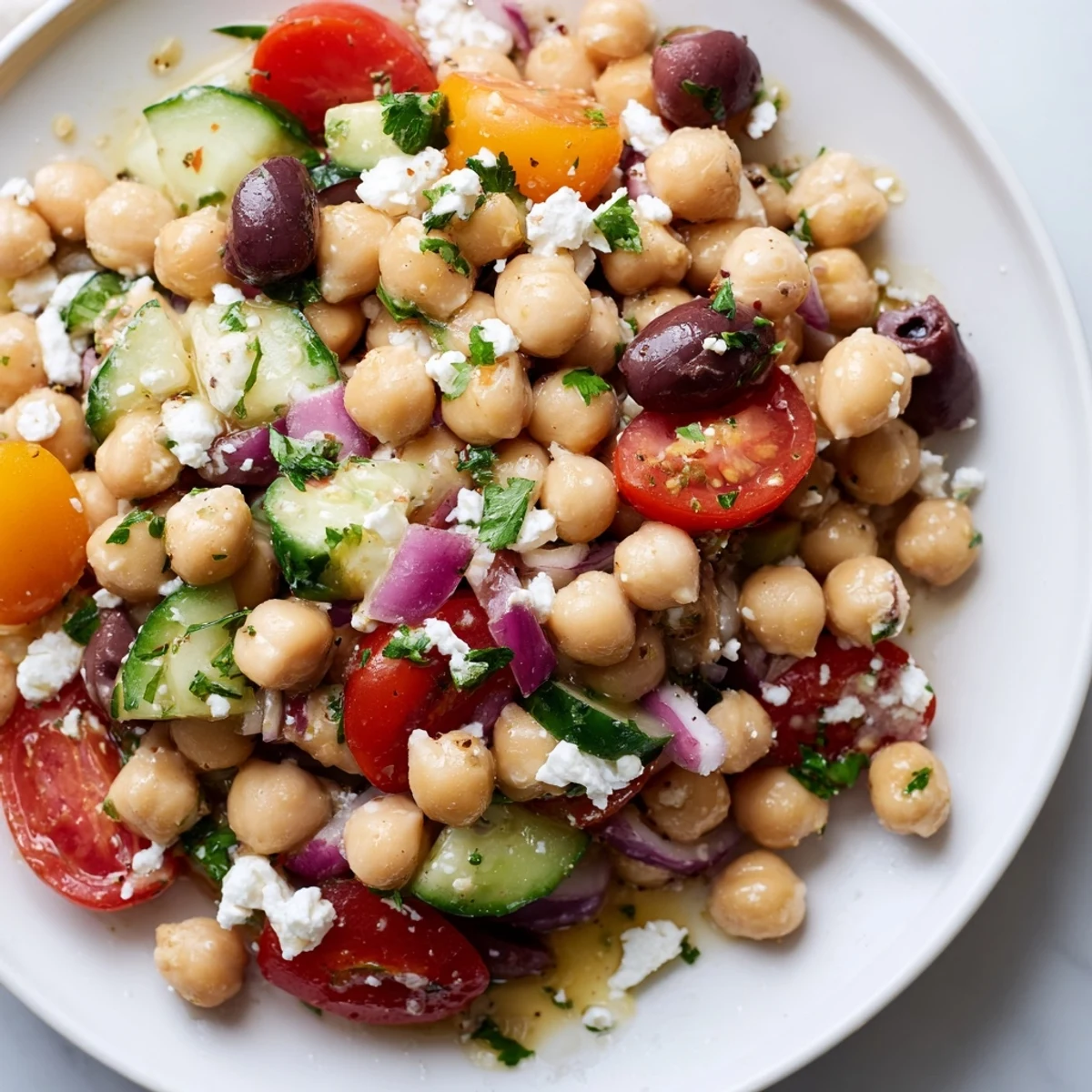
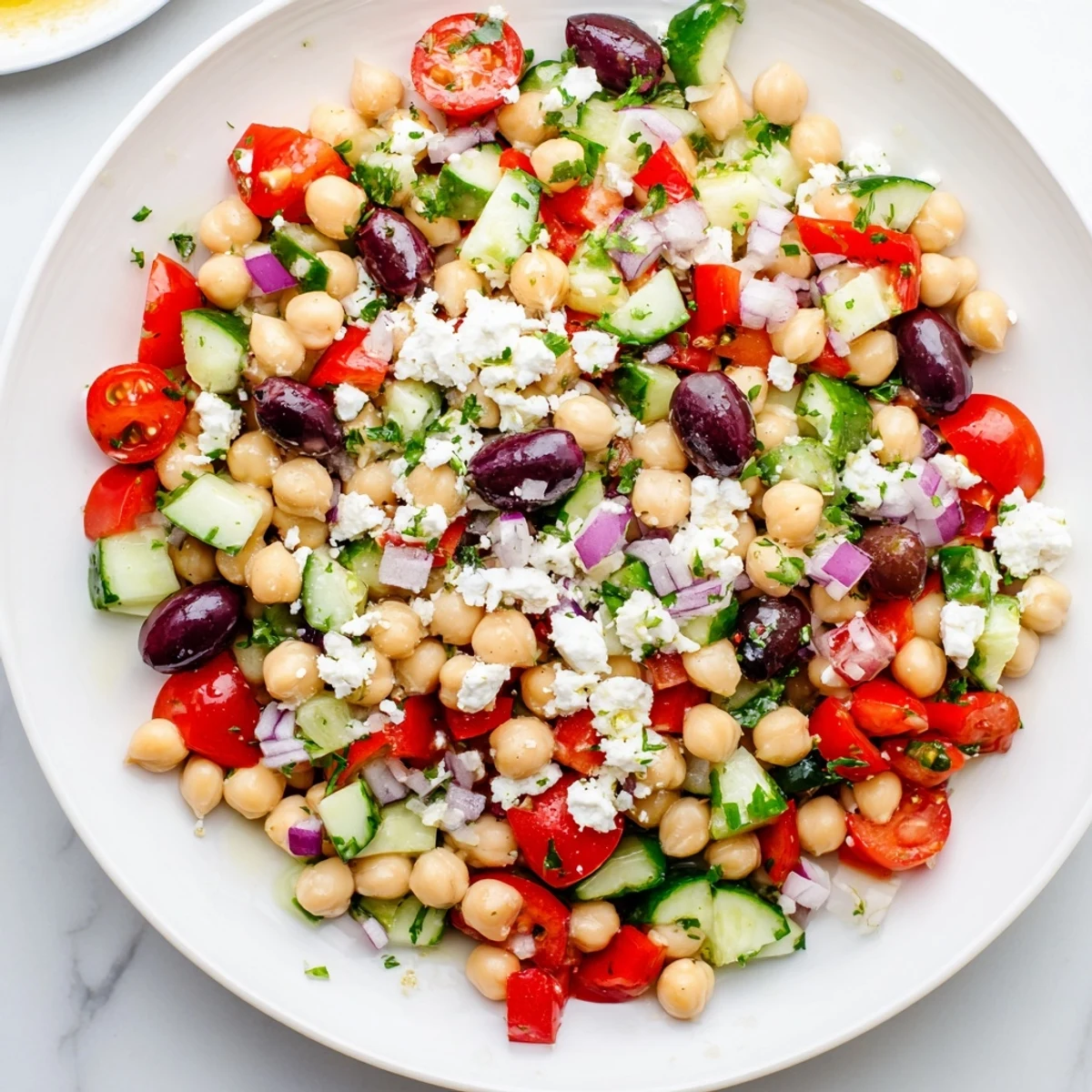
 Dieser mediterrane Salat kombiniert proteinreiche Kichererbsen mit würzigem Feta und frischem Gemüse wie Gurke, Tomaten und roten Paprika. Ein zitronenbasiertes Dressing mit Olivenöl, Knoblauch und Oregano rundet den Geschmack ab. Die Zubereitung ist schnell und einfach, ideal für eine leichte Mahlzeit oder als Beilage. Frische Kräuter wie Petersilie verleihen zusätzliche Frische und Aroma. Der Salat kann sofort serviert oder gekühlt werden, um die Aromen intensiv wirken zu lassen.
Last summer, I was tasked with bringing a dish to a potluck on the hottest day of the season, and I found myself standing in front of an open fridge, desperately needing something that wouldn't wilt in the heat. That's when this Mediterranean chickpea salad came together almost by accident—a handful of pantry staples and whatever vegetables looked freshest, all brought together by a squeeze of lemon and good olive oil. The first bite transported me straight to a sunny afternoon in a Greek taverna, even though I was standing in my own kitchen. What surprised me most was how the feta didn't dissolve into the dressing but instead held its shape, creating little pockets of creamy tanginess with every forkful. My friend Maria tasted it and asked for the recipe before she even finished her plate.
I made this for a book club gathering on a Tuesday evening, and what started as a simple salad became the unexpected star of the table. Someone asked if it was store-bought because it looked so polished, and I remember feeling oddly proud explaining how the bright colors came from just letting the vegetables be themselves, without any fussing. One guest came back for thirds and mentioned she'd been skeptical of chickpeas until that moment—she'd always thought they were boring, but the way they soaked up that lemony dressing changed her mind entirely.
Ingredients
- Chickpeas (2 cups, drained and rinsed): These are the backbone of the salad, providing substantial protein and a creamy texture that keeps you satisfied; always rinse canned ones under cold water to remove excess sodium and that metallic taste.
- Cherry tomatoes (1 cup, halved): Use the sweetest ones you can find—they should smell fragrant at the market, and halving them rather than quartering keeps them from disappearing into the salad.
- Cucumber (1 cup, diced): Choose a firm, unblemished cucumber and dice it just before serving so it stays crisp and doesn't release too much water into the dressing.
- Red bell pepper (1/2 cup, diced): The color adds visual brightness, but more importantly, it brings a subtle sweetness that balances the acidity of the lemon.
- Red onion (1/4 cup, finely chopped): Don't skip this or use yellow onion; the red variety is milder and its purplish hue makes the salad look even more vibrant.
- Kalamata olives (1/3 cup, pitted and sliced): These are essential to the Mediterranean identity of this dish; buy them pitted if you can find them, and slice them generously so you get one in most bites.
- Feta cheese (1/2 cup, crumbled): Add this after the dressing so it doesn't break down into the liquid; the cool, salty cheese creates wonderful contrast against the zesty dressing.
- Fresh parsley (1/4 cup, chopped): This brightens everything up at the last moment; it's worth using fresh rather than dried, and tear it with your hands rather than chopping if you want to preserve its delicate flavor.
- Extra-virgin olive oil (3 tbsp): This isn't the place to skimp; good olive oil carries the personality of the entire dressing, so taste it first to make sure you like it.
- Fresh lemon juice (2 tbsp): Always squeeze your own; bottled juice tastes tinny and won't bring the same brightness to the salad.
- Garlic clove (1, minced): One small clove is enough; mince it finely and let it sit in the dressing for a few minutes before tossing so the flavor distributes evenly.
- Dried oregano (1 tsp): Mediterranean cooking relies on oregano, and this small amount is what makes the salad taste authentic rather than like a random vegetable mix.
- Sea salt and freshly ground black pepper (1/4 tsp salt, 1/8 tsp pepper): Taste as you go because feta and olives are already salty, and you might need less than the recipe suggests.
Instructions
- Gather and prep your vegetables:
- Rinse your chickpeas thoroughly under cold water, letting them drain completely in a colander. Halve the cherry tomatoes, dice the cucumber and red pepper into roughly the same-sized pieces so everything cooks evenly together, and mince the red onion as finely as you can manage.
- Build the base:
- Combine the chickpeas, tomatoes, cucumber, bell pepper, red onion, olives, and fresh parsley in a large bowl, stirring gently so the vegetables mix without bruising each other. Take a moment to admire the colors before you add the dressing.
- Create the dressing:
- In a separate small bowl, whisk together the olive oil, lemon juice, minced garlic, oregano, salt, and pepper, stirring until the salt dissolves completely and the dressing tastes balanced. Trust your palate here; if it tastes too acidic, add a bit more oil, and if it feels flat, squeeze in a little more lemon.
- Marry the flavors:
- Pour the dressing over the salad and toss gently with two large spoons or your hands, making sure every vegetable gets coated but nothing gets mashed. The goal is to preserve the vegetables' texture while letting them absorb the flavor of the dressing.
- Add the finishing touch:
- Scatter the crumbled feta cheese over the top and give the salad one final, gentle toss, being careful not to break apart the feta into dust. Serve immediately if you prefer crisp vegetables, or cover and refrigerate for up to 30 minutes if you want the flavors to meld and deepen.
 Anheften
 I brought this salad to my grandmother's house one summer evening, and she surprised me by finishing her entire bowl and then asking if I'd learned to cook like this from my mother. We spent the next hour sitting on her porch talking about food and memory, and somehow this simple salad became the backdrop for one of our longest conversations. That's when I realized that the best recipes aren't the ones with the fanciest techniques—they're the ones that bring people together and create space for connection.
Why This Salad Works Year-Round
Most salads feel seasonal, but this Mediterranean version adapts beautifully to whatever the market offers. In summer, I use the sweetest tomatoes and crispest cucumbers I can find, while in winter, I rely on good quality canned tomatoes and substitute bell peppers with roasted red peppers from a jar. The beauty is that the dressing and the chickpeas remain constant, creating a familiar base that tastes fresh no matter the season.
Making It a Complete Meal
While this salad shines as a side, it becomes a satisfying lunch or dinner when you add a grain or bread. I often serve it over warm farro or bulgur, which soaks up the dressing and becomes slightly creamy, or alongside warm pita bread that you can fill with the salad for a handheld version. Some evenings I simply add a handful of fresh greens underneath and call it a substantial dinner for one, eating it slowly while reading.
Storage and Make-Ahead Tips
This salad improves with time, making it ideal for meal prep or advance planning. You can assemble everything except the cucumber and feta up to 24 hours ahead, then add those components just before serving to maintain crispness. The dressing keeps separately in a small jar in the fridge for up to a week, so you can always have the components ready to toss together for a quick lunch.
- Store the salad in an airtight container and it will keep in the fridge for up to 3 days, though the vegetables will gradually soften and release liquid.
- If you're adding grains or bread to turn this into a main course, prep those separately and assemble just before eating to maintain the best texture and flavor.
- For potlucks or gatherings, transport the components in separate containers and dress everything just before serving so nothing gets soggy.
 Anheften
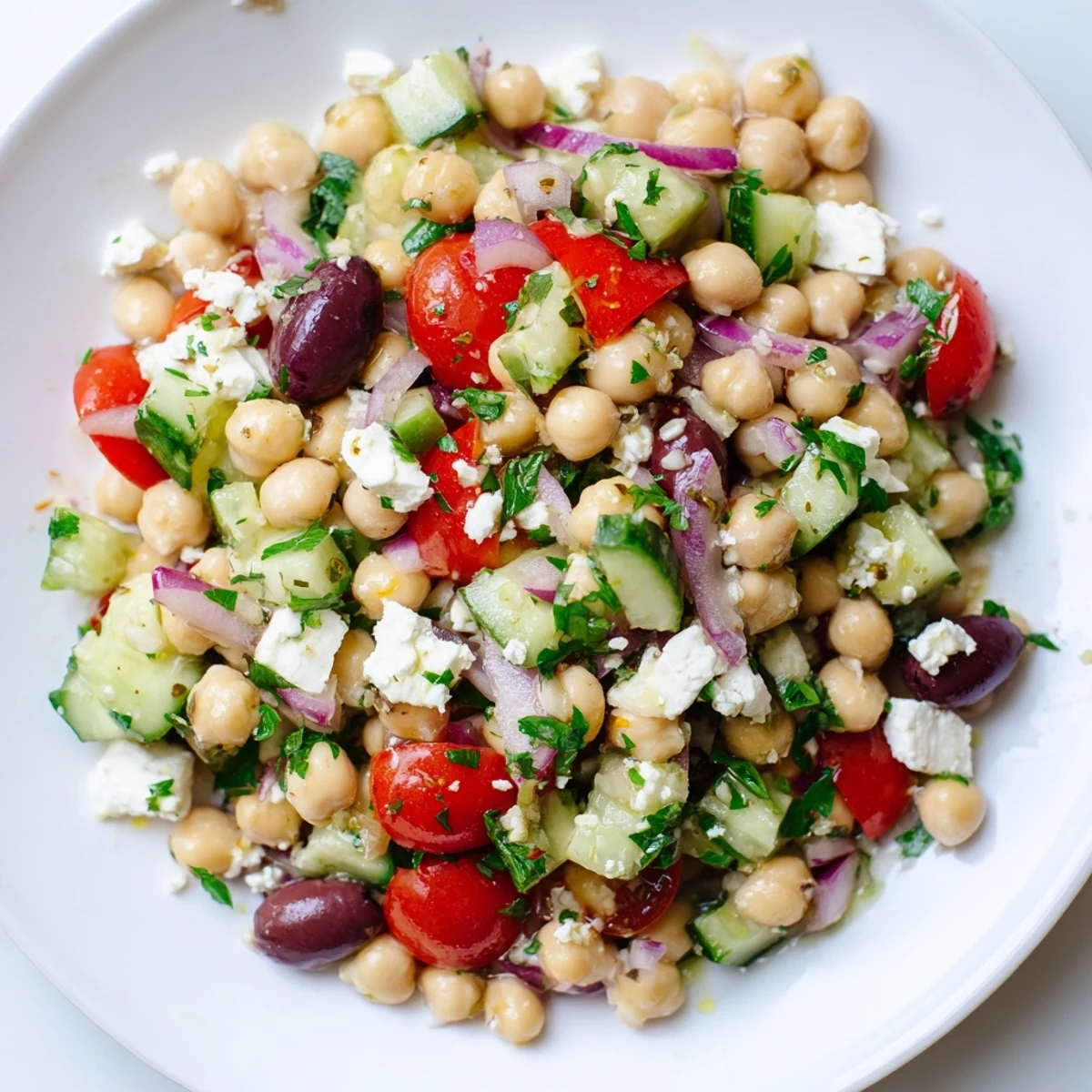
 This salad taught me that sometimes the simplest combinations are the most memorable, especially when they're made with intention and shared generously. It lives in my regular rotation now, a reliable friend that never disappoints.
Fragen & Antworten zum Rezept
- → Wie lange hält sich der Salat frisch?
-
Im Kühlschrank gelagert bleibt der Salat bis zu 2 Tage frisch, dabei können die Aromen sogar intensiver werden.
- → Kann man den Feta durch eine vegane Alternative ersetzen?
-
Ja, veganer Feta funktioniert gut, um eine milchfreie und dennoch würzige Note zu erhalten.
- → Passt der Salat zu warmen Gerichten?
-
Der Salat eignet sich hervorragend als Beilage zu gegrilltem Fleisch oder Fisch sowie als leichte Hauptspeise.
- → Welche Kräuter passen gut zum Dressing?
-
Frischer Oregano, Petersilie, Minze oder Basilikum ergänzen das Dressing optimal und verstärken die mediterranen Aromen.
- → Kann der Salat im Voraus zubereitet werden?
-
Ja, der Salat lässt sich gut vorbereiten, wobei das Dressing am besten kurz vor dem Servieren hinzugefügt wird.