 Anheften
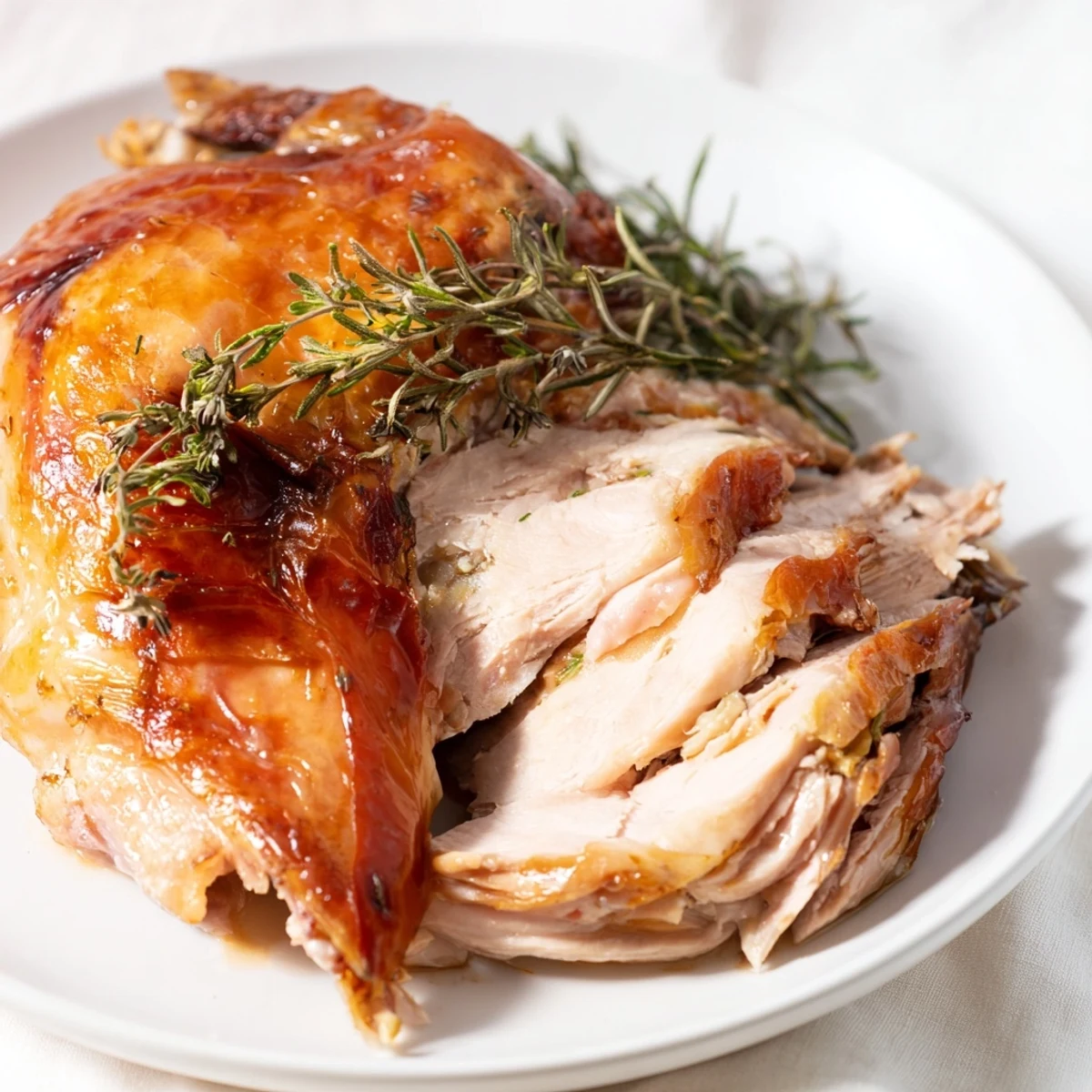
 Diese saftige Pute begeistert mit einer krossen, goldbraunen Haut und einer Füllung aus Zwiebeln, Zitrone, Knoblauch sowie frischem Rosmarin, Thymian und Salbei. Sanft mit Butter und Olivenöl massiert, wird sie langsam im Ofen gebraten und zwischendurch mit eigenen Bratensäften bestrichen. Das Ergebnis ist ein aromatischer Hauptgang, der durch seinen würzigen Geschmack und eine zarte Textur besticht. Nach dem Ruhen lässt sich das Fleisch leicht schneiden und bestens zu feierlichen Essen servieren.
The first time I roasted a turkey solo, I was terrified—but the moment that bird came out of the oven with burnished, crackle-skinned perfection, I realized it wasn't as mysterious as I'd feared. Years later, I still approach turkey day with the same quiet reverence, though now I know the real magic happens in those final resting minutes when the meat settles into its juiciest self. This recipe is the result of learning what actually matters: proper seasoning, aromatics that perfume from within, and patience with the basting brush.
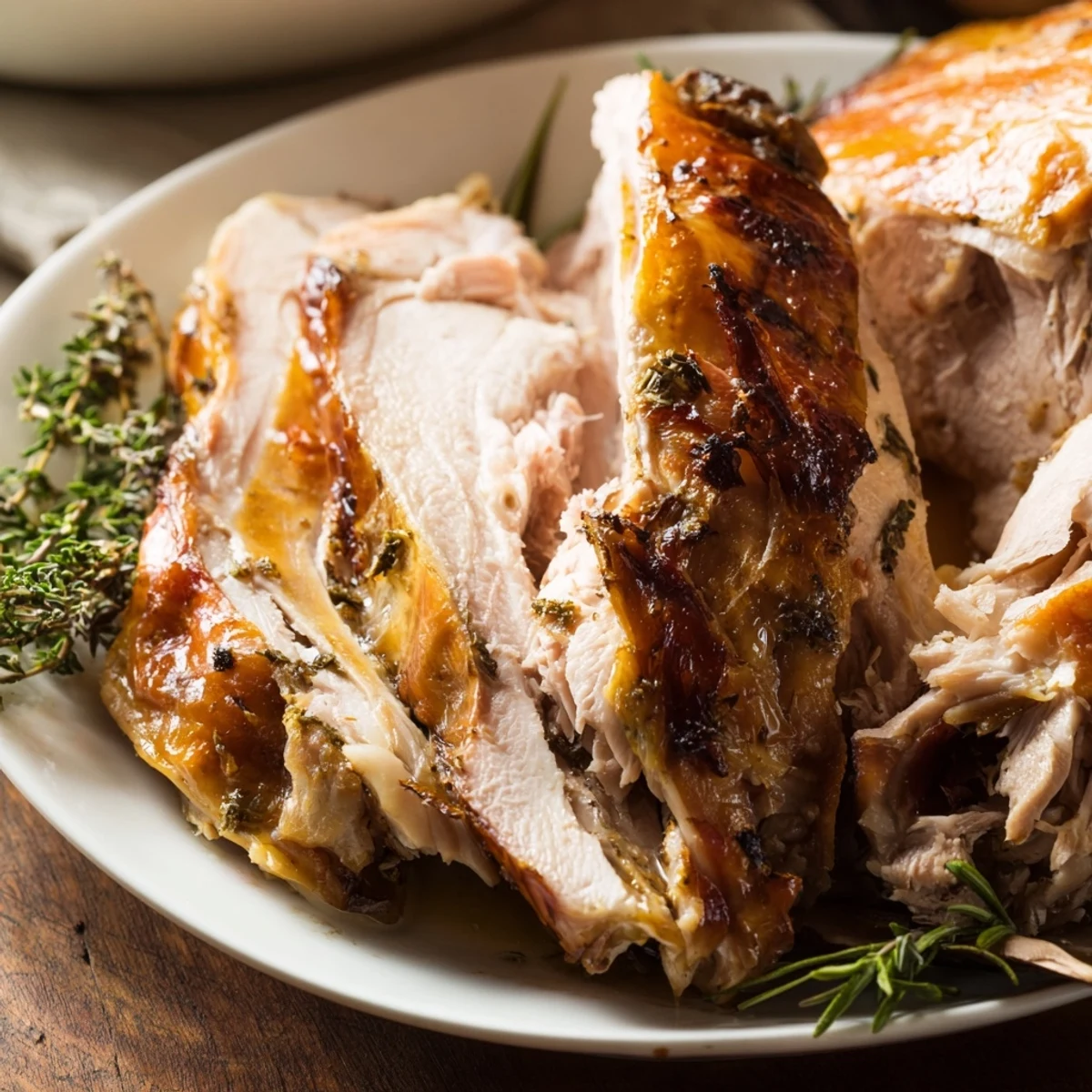
I'll never forget watching my dad carve the turkey at our kitchen counter, the steam rising up as he worked through the job with his old carving knife, pausing to let people grab warm pieces straight from the board. That's when I understood why people gather around this dish—it's not just about the taste, it's about the ritual of breaking it down together and the generosity of abundance.
Ingredients
- 1 whole turkey (12–14 lbs): Make sure it's fully thawed in the refrigerator, never at room temperature, or bacteria can multiply dangerously.
- 2 onions, quartered: These stay in the cavity and flavor the turkey from inside—they're not meant to be eaten.
- 1 lemon, halved: The acidity helps keep the meat moist and adds brightness to any pan juices.
- 1 head garlic, halved horizontally: Cut it this way so the cloves stay put and release their perfume slowly.
- Fresh rosemary, thyme, and sage (4 sprigs each): Fresh herbs make a visible difference; dried will work if that's what you have, but use about 1 teaspoon per tablespoon of fresh.
- 120 g (½ cup) unsalted butter, softened: Softened butter slides under the skin without tearing it—cold butter will crack right through.
- 2 tbsp olive oil: This helps the exterior brown evenly and keeps the skin from sticking to the pan.
- Kosher salt and freshly ground black pepper: These are your foundation; don't skimp or use pre-ground pepper if you can avoid it.
- 1 cup (240 ml) low-sodium chicken broth: This keeps the pan moist and gives you something to baste with, plus it becomes the base for gravy.
Instructions
- Prepare your space and oven:
- Preheat to 325°F (165°C) with the rack in the lower third—this lets heat circulate under and around the bird. A lower temperature means slower, more even cooking.
- Get the turkey ready:
- Remove everything from inside the cavity and pat the skin completely dry with paper towels. Moisture is the enemy of crispy skin, so don't skip this step.
- Butter under the skin:
- Gently separate the skin over the breast with your fingers, working from the neck opening. Slide half the softened butter under there and smooth it down—this is where the real flavor and moisture happens.
- Season everywhere:
- Rub the remaining butter and olive oil all over the outside, then dust it all with salt, pepper, and paprika if you're using it. Get inside the cavity too—don't forget the legs and thighs.
- Stuff the cavity:
- Pack in the onions, lemon, garlic, and herbs. They'll perfume the meat as it roasts but won't make it soggy because there's no liquid stuffing.
- Truss and position:
- Tie the legs together with kitchen twine and tuck the wing tips under to create a compact shape that roasts evenly. Place it breast-side up on a rack in your pan with the broth poured around it.
- Roast and baste:
- Put it in uncovered and baste every 45 minutes with the pan juices using a brush or spoon. If the skin is browning too fast (it shouldn't at 325°F, but sometimes it does), loosely tent with foil.
- Know when it's done:
- Roast for about 13–15 minutes per pound, checking with a meat thermometer in the thickest part of the thigh—you're looking for 165°F (74°C). This is non-negotiable for food safety, but don't go much higher or the meat becomes dry.
- Rest it properly:
- Remove from the oven and loosely tent with foil, then let it sit for at least 20–30 minutes. This rest period is when the meat reabsorbs its juices and transforms from good to incredible.
 Anheften
 There's something almost sacred about standing in front of the oven window at the three-hour mark, watching that bird finish its transformation from raw poultry to a golden centerpiece. That's the moment when the kitchen smells like home and everyone stops what they're doing, drawn by the aroma of roasted herbs and caramelized skin.
Why Aromatics Matter More Than You Think
The onions, lemon, garlic, and herbs inside the cavity aren't just decoration—they create an aromatic envelope that seasons the meat from within while it roasts. I learned this the hard way after making a bland turkey my second year of cooking; switching to fresh herbs and stopping the practice of stuffing with bread made everything change. The cavity becomes a gentle steam bath of flavor that the meat absorbs over hours.
The Low-and-Slow Method Works
Roasting at 325°F instead of the traditional higher temperatures feels counterintuitive, but it gives you much more control and forgiveness. A faster roast can leave the outside overcooked and the inside slightly underdone, whereas this gentler approach means the thighs and the breast finish cooking at almost the same time. You'll have fewer moments of panic watching the clock.
Basting, Resting, and Other Final Thoughts
Basting every 45 minutes keeps the skin moist and helps it color evenly—set a timer or you'll forget. The resting step is your insurance policy for juicy meat, and those 20 to 30 minutes are the difference between a good turkey and one that people actually remember.
- If you want to add carrots and celery to the pan, lay them under the rack where they'll get roasted in the drippings.
- Save those pan juices for gravy, or they'll go to waste and you'll regret it later.
- Leftover turkey makes incredible sandwiches and soups, so you're really getting two or three meals from this one bird.
 Anheften
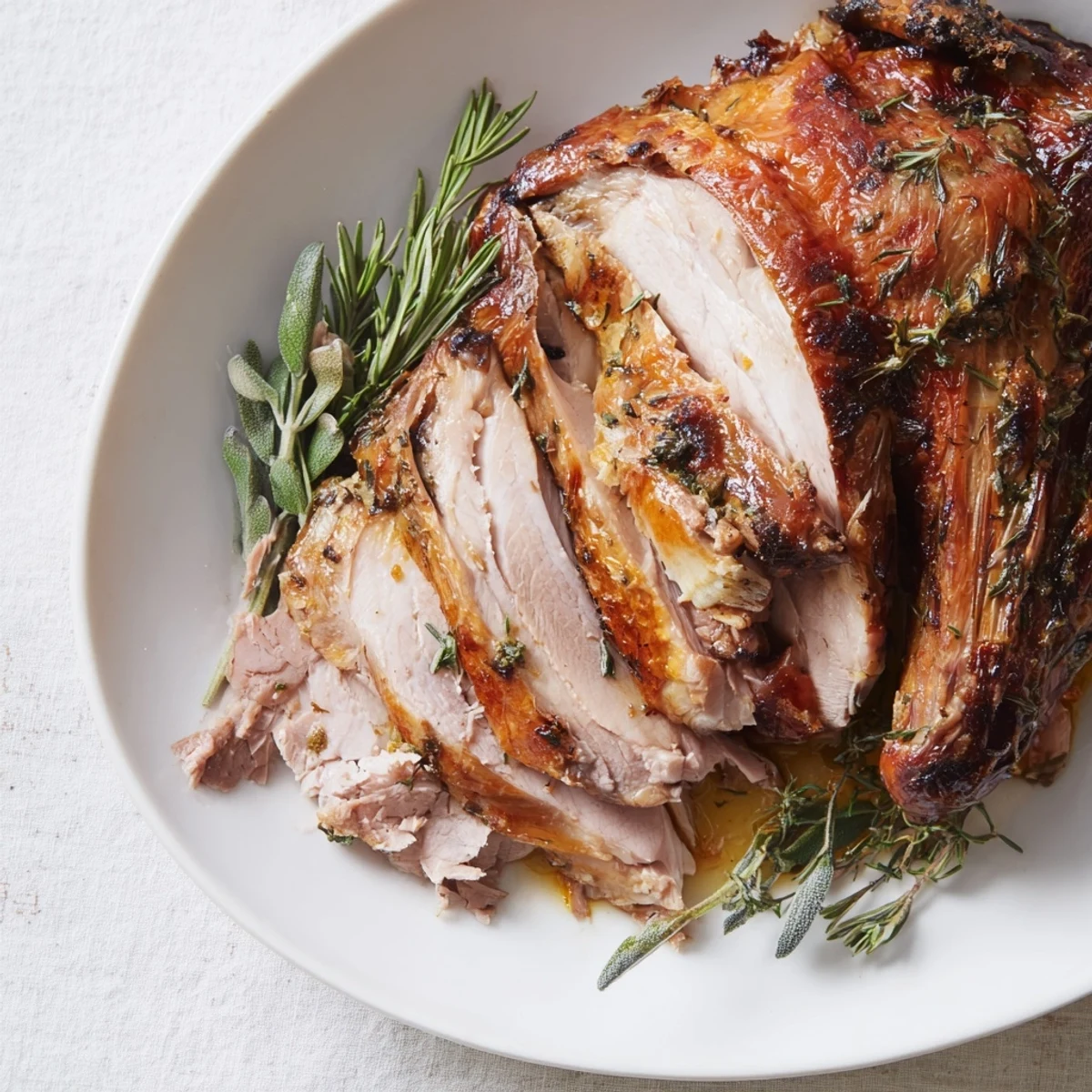
 This turkey recipe has become the centerpiece of every gathering because it actually works, and because it gives you time to be present instead of stressed. Once it's resting, the hard part is done.
Fragen & Antworten zum Rezept
- → Wie erreiche ich besonders knusprige Haut?
-
Das langsame Braten bei mittlerer Temperatur und regelmäßiges Bestreichen mit Bratensaft fördert eine knusprige, goldbraune Haut.
- → Welche Kräuter eignen sich für die Aromatisierung?
-
Frischer Rosmarin, Thymian und Salbei verleihen eine harmonische Kräuternote.
- → Wie kontrolliere ich die Garzeit richtig?
-
Ein Fleischthermometer ist hilfreich. Die Pute ist fertig bei 74°C im dicksten Teil des Oberschenkels.
- → Kann ich die Pute vor dem Braten füllen?
-
Ja, die Aromaten wie Zwiebeln, Zitrone und Kräuter werden in die Höhlung gelegt, um das Fleisch zu würzen.
- → Wie lange sollte die Pute nach dem Braten ruhen?
-
Ein Ruhezustand von 20 bis 30 Minuten mit lockerem Folientent sorgt für saftige Ergebnisse.
- → Welche Beilagen passen gut dazu?
-
Klassische Beilagen sind Gemüse, Bratensoßen und fruchtige Saucen wie Cranberry.